.svg)
Deep cleaning services in Singapore provide a detailed, one-time clean that goes beyond routine dusting, vacuuming and mopping. They are most suitable when a home has accumulated grime, needs to be prepared for moving, contains post-renovation dust or requires a thorough seasonal reset.
Unlike regular cleaning, a professional deep cleaning service covers areas often missed during weekly upkeep, such as cabinet interiors, internal windows and frames, appliance interiors, light fixtures, ceiling fans and spaces behind movable furniture. The exact scope still depends on the provider, property condition and agreed checklist, so it is important to confirm what is included before booking.
This 2026 guide explains the main types of deep cleaning, how the process works, what RitzHelper includes and how to decide whether deep or regular cleaning is right for your home.
What Is Deep Cleaning?
Deep cleaning is a more thorough form of home cleaning that uses specialised equipment, machines where required, and suitable cleaning agents to tackle built-up dirt, dust, grime and stubborn stains in frequently used and less accessible areas.
Regular cleaning focuses on maintaining general cleanliness. It usually covers tasks such as floor cleaning, accessible surface dusting, basic bathroom cleaning and kitchen upkeep. Deep cleaning expands the scope to detailed areas that do not need attention every week but can accumulate dirt over time.
Examples include:
- Inside cabinets and wardrobes
- Internal windows and window frames
- Light fixtures and ceiling fans
- Areas above, underneath and behind movable furniture
- Kitchen appliance interiors
- Cooker hoods and backsplashes
- Door frames, handles, switches and ledges
- Detailed bathroom fixtures and toilet descaling
A house deep cleaning service is generally booked as a one-time reset rather than a recurring weekly appointment. Once the home has been thoroughly cleaned, regular cleaning can help maintain the new baseline.
Regular Cleaning vs Deep Cleaning Services in Singapore
The difference is not simply that one service “cleans better”. Each service is designed for a different job.
If your floors, kitchen and bathrooms simply need consistent upkeep, regular home cleaning may be sufficient. If dirt has accumulated inside storage spaces, around fixtures or behind furniture, deep cleaning is likely to be the better starting point.
Types of Deep Cleaning Services Singapore Homeowners Can Book
The right type of deep cleaning depends on why the home needs attention. Booking by situation makes it easier to agree on the correct scope.
1. General or Seasonal Home Deep Cleaning
General home deep cleaning is suitable when the home is occupied but has not received a detailed clean for some time.
Common triggers include:
- Dirt and grime have accumulated despite routine cleaning
- Cabinets, wardrobes and appliance interiors need attention
- The home needs a thorough reset before a festive period or family gathering
- Less accessible areas have been repeatedly postponed
- Regular cleaning sessions are being consumed by old build-up
This option can help create a cleaner baseline without involving a move or renovation.
2. Move-In Deep Cleaning
Move-in cleaning prepares a new home before belongings are unpacked and daily life begins.
An empty or mostly empty property gives cleaners better access to cabinet interiors, wardrobes, floors, corners and spaces that may become obstructed after furniture and boxes arrive.
For the most efficient process, schedule the cleaning after renovation or rectification work is complete but before large furniture and personal items are moved in.
3. Move-Out Deep Cleaning
Move-out cleaning is designed for a property being handed back to a landlord, buyer or incoming occupant.
It may involve detailed attention to:
- Empty cabinets and wardrobes
- Kitchen appliances and storage areas
- Bathroom fixtures
- Internal windows and frames
- Floors, ledges, doors and handles
- Areas previously covered by furniture
Cleaning requirements can differ between landlords, agents and tenancy agreements. Ask for any handover checklist in advance and share it with the cleaning provider rather than assuming every requirement is automatically included.
4. Post-Renovation Deep Cleaning
Post-renovation cleaning addresses dust, loose residue and materials left after renovation work.
Fine dust can settle across horizontal surfaces, inside storage spaces, on fixtures and in corners even after the contractor has completed a basic clean. The home should therefore be cleaned after noisy or dusty works have ended and before soft furnishings and personal belongings are fully arranged.
Major construction-waste removal, paint correction, adhesive removal, polishing or repairs should not be assumed to be part of a standard house deep cleaning service. Describe the remaining condition clearly and confirm any unusual work before accepting the quotation.
What Do RitzHelper’s Deep Cleaning Services Include?
RitzHelper’s published deep home cleaning checklist covers general areas, kitchens, bathrooms and floors. Cleaning equipment is also stated as included for deep-cleaning appointments.
The room-by-room scope below reflects the current published checklist. Actual requirements should still be confirmed when booking.
Living Room, Dining Area, Balcony and Bedrooms
Published tasks include:
- Dusting, wiping and cleaning accessible surfaces
- Cleaning furniture, shelves, light switches and electronics externally
- Cleaning ledges, doors, door handles and knobs
- Cleaning the interior and exterior of cabinets, wardrobes and TV consoles
- Cleaning mirrors and glass surfaces
- Cleaning internal windows and window frames
- High dusting and wiping up to 2 m
- High dusting of air-conditioning units, corners and ceilings
- Cleaning light fixtures and ceiling fans
- Cleaning above, underneath and behind furniture that can be moved by one person
Before the session, empty or organise cabinet interiors that you want cleaned. Cleaners can work more effectively when they do not need to decide where personal items belong.
Kitchen Deep Cleaning
Kitchen work can include:
- Cleaning countertops and accessible surfaces
- Wiping the exterior of kitchen appliances
- Cleaning the cooker, hood and backsplash
- Cleaning cabinet interiors, exteriors and handles
- Cleaning the sink and tap
- Cleaning the interior and exterior of the microwave and oven
- Cleaning the interior and exterior of the refrigerator
- Cleaning the washing machine and dryer where applicable
- Cleaning above, underneath and behind furniture that one person can move
Remove food, cookware and loose items from any appliance or cabinet interior included in the scope. If the refrigerator will be cleaned inside, ask whether it should be emptied and switched off before the appointment.
Bathroom Deep Cleaning
Bathroom tasks include:
- Cleaning toilets, showers, sinks and bathtubs where applicable
- Wiping mirrors and glass surfaces
- Cleaning countertops, fixtures and accessible surfaces
- Descaling the toilet bowl
- Cleaning bathroom floors
Heavy mould, damaged grout, leaking fixtures or permanent discolouration may require a specialist or repair rather than cleaning alone. Share photographs before booking if you are unsure whether a mark can be treated within the normal scope.
Floors and Final Waste
Across the home, RitzHelper’s published scope includes:
- Vacuuming floors, carpets and rugs where applicable
- Mopping suitable floor surfaces
- Removing rubbish generated during the cleaning process
Pre-existing bulky waste, renovation debris or unwanted furniture may require separate disposal arrangements. Confirm this before the appointment instead of leaving large items for the cleaning team to assess on arrival.
What May Not Be Included in a Standard Deep Cleaning Service?
“Deep cleaning” does not mean every possible cleaning or maintenance task is automatically covered.
Ask the provider to confirm the following separately if required:
- Exterior windows or difficult external access
- Areas higher than the provider’s stated reach
- Moving heavy furniture that cannot be handled safely by one person
- Removal of bulky waste or large quantities of renovation debris
- Carpet shampooing or extraction cleaning
- Mattress, sofa or curtain cleaning
- Pest control
- Mould remediation
- Painting, repairs or restoration work
- Floor polishing
- Removal of permanent stains, damage or discolouration
This scope check is one of the most important steps when comparing professional deep cleaning services in Singapore. A lower quotation may cover fewer areas, while a higher quotation may include equipment, more detailed work or a broader checklist.
How Does a Professional Deep Cleaning Service Work?
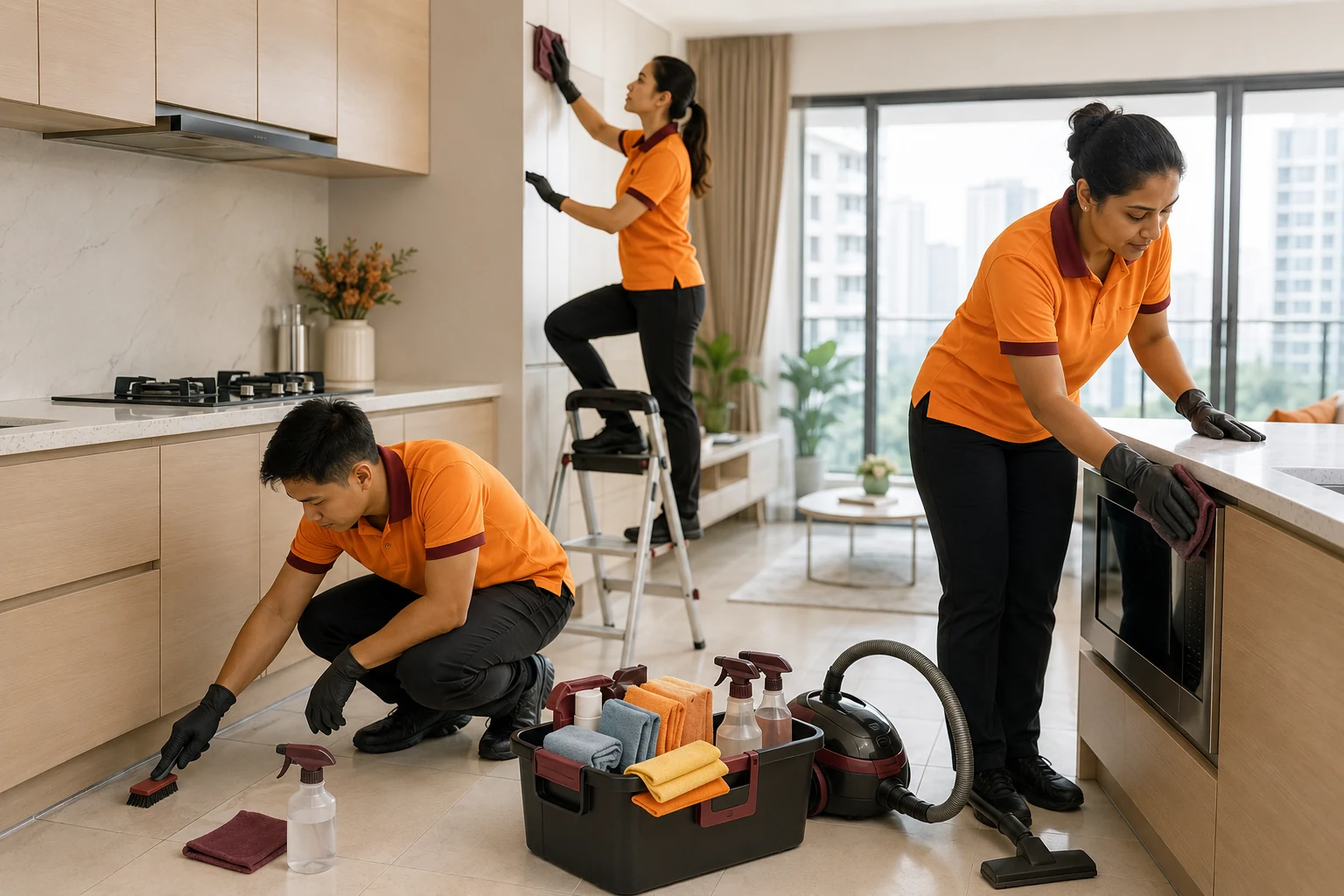
A clear process reduces missed areas and last-minute misunderstandings. For RitzHelper, booking begins through WhatsApp or Telegram, followed by sharing your details, confirming the appointment and completing payment through the available method.
A well-planned deep cleaning process generally follows these stages.
Step 1: Define the Cleaning Situation
Tell the provider whether the service is for:
- An occupied-home reset
- Moving in
- Moving out
- Post-renovation cleaning
- Seasonal cleaning
The same property can require a different scope depending on its condition and whether furniture or belongings are present.
Step 2: Share the Property Details
Provide:
- Property type, such as HDB flat, condominium or landed home
- Approximate floor area in sq ft
- Number of bedrooms and bathrooms
- Whether the property is occupied, empty or partly furnished
- Preferred cleaning date
- Access, parking or condominium-management requirements
- Photographs of heavy build-up or unusual areas
This information helps the provider assess the job before the team arrives.
Step 3: Agree on the Scope
Review the checklist room by room. Identify must-complete areas, optional items and tasks requiring separate confirmation.
Pay particular attention to:
- Cabinet and wardrobe interiors
- Internal windows and frames
- Appliance interiors
- High areas
- Furniture movement
- Renovation residue
- Bulky rubbish or disposal needs
A written scope is more useful than relying on the phrase “whole-house deep cleaning”, which can mean different things to different providers.
Step 4: Confirm the Quotation and Schedule
Deep cleaning prices are commonly influenced by floor area and the agreed scope. Check whether the quotation is the final amount, whether GST is included and whether any requested work is priced separately.
RitzHelper publishes floor-area pricing tiers for deep cleaning, while properties above the largest listed tier require a quotation. Refer to the current RitzHelper pricing page or ask the team to confirm the latest amount before booking.
Step 5: Prepare the Home
Remove clutter and personal items from the areas to be cleaned. Empty relevant cabinets and appliances, secure valuables and arrange access to electricity and water.
For condominium properties, check whether management approval, lift padding, loading-bay access or contractor registration is required. Completing these arrangements before the appointment prevents access delays.
Step 6: Deep Cleaning Begins
The cleaners work through the agreed areas and checklist using the included equipment. A practical order often moves from higher surfaces to lower ones and from detailed area cleaning towards final vacuuming and mopping, so settled dust can be collected near the end.
The precise team arrangement, task sequence and duration depend on the property and confirmed booking. Ask for these details if they affect your moving or renovation schedule.
Step 7: Review the Agreed Priorities
Before the team leaves, review the agreed must-complete areas where possible. Focus on the written scope rather than judging only whether the home “looks cleaner”.
Check accessible cabinet interiors, appliance interiors, bathroom fixtures, internal windows and areas behind movable furniture if they were included. Raise any scope questions promptly through the agreed support channel.
How to Choose the Best Deep Cleaning Services in Singapore
The best deep cleaning services in Singapore are not necessarily those with the longest task list or the lowest advertised price. The right provider is the one whose scope, operational limits and quotation match the condition of your home.
Use this seven-point check.
1. Look for a Room-by-Room Checklist
A detailed checklist shows what will be cleaned in general areas, kitchens and bathrooms. It also makes the final review more objective.
RitzHelper uses its Bespoke Ritz Checklist as a coverage standard and publishes its main deep-cleaning inclusions online.
2. Confirm the Important Limits
Ask about high areas, heavy furniture, exterior windows and waste removal. RitzHelper’s current checklist, for example, states a 2 m high-dusting limit and covers areas behind furniture that can be moved by one person.
Specific limits are more useful than a vague promise to clean “every corner”.
3. Check Whether Equipment Is Included
Equipment requirements affect both convenience and total cost. RitzHelper states that cleaning equipment is included for deep cleaning, move-in/move-out and post-renovation appointments.
4. Match the Service to the Trigger
A move-out property, occupied family home and newly renovated flat do not have identical needs. Choose a provider that confirms the relevant scope instead of treating every deep house cleaning job as interchangeable.
5. Ask for Transparent Pricing
The quotation should explain the property size, included scope, GST treatment and any separately priced work. Do not rely only on a “from” price without checking what it covers.
6. Check Cleaner Standards and Support
RitzHelper positions its service around trained full-time cleaners, hotel-grade training, flexible scheduling and conversational support. When comparing providers, look for verifiable information about cleaner arrangements and a clear channel for booking questions or changes.
7. Avoid Unsupported Superlatives
Ratings, awards and “number one” claims should be independently verifiable. A clear checklist, realistic limitations and written quotation provide stronger booking evidence than marketing language alone.
A Practical Scope-Lock Checklist Before You Pay
Use this checklist to turn a general enquiry into a clear booking:
- Confirm the property type and floor area
- State whether the home is occupied, empty or newly renovated
- Share the number of bedrooms and bathrooms
- Send photographs of heavy dirt, residue or unusual surfaces
- Mark the three most important areas
- Confirm cabinet and wardrobe interiors
- Confirm appliance interiors
- Confirm internal-window coverage
- Ask about areas above 2 m
- Identify furniture that must be moved
- Confirm equipment and cleaning-product provision
- Separate bulky-waste disposal from cleaning waste
- Confirm GST and the final payable amount
- Confirm the date, access arrangements and change policy
This scope-lock method helps prevent two common problems: expecting work that was never included and paying for a broad package without identifying the areas that matter most.
How to Prepare for Home Deep Cleaning
Professional cleaners can focus more time on cleaning when the property is prepared properly.
Before the appointment:
- Remove loose clutter. Put away clothing, documents, toys and small items.
- Empty the required storage spaces. Clear cabinets, wardrobes and drawers that are part of the agreed scope.
- Prepare appliance interiors. Remove food and personal items from the refrigerator, microwave or oven if they will be cleaned internally.
- Secure valuables. Store jewellery, cash, keys and sensitive documents safely.
- Identify delicate surfaces. Point out natural stone, wood, special coatings or fragile fittings.
- Arrange building access. Confirm lift, parking and contractor requirements with the property management.
- Keep utilities available. Ensure the team can access water and electricity.
- Separate cleaning from disposal. Remove bulky unwanted items unless disposal has been confirmed as part of the booking.
- Protect the schedule. Avoid overlapping renovation, delivery or moving work that creates new dust while cleaning is underway.
For a move-in home, the ideal sequence is generally: complete repair or renovation work, finish deep cleaning, allow surfaces to dry where needed, then bring in furniture and belongings.
What Should You Do After Deep Cleaning?
Deep cleaning creates a reset; regular habits help preserve it.
Use this maintenance plan:
- Wipe kitchen spills and grease before they harden
- Keep bathroom surfaces dry where practical
- Vacuum or sweep high-traffic floors regularly
- Avoid refilling cabinets until cleaned interiors are dry
- Rotate less frequent tasks such as internal windows and appliance cleaning
- Arrange one-time or weekly home cleaning when routine maintenance starts consuming too much time
A useful rule is to track which three areas become dirty first after the deep clean. Those areas should become the priorities in future regular-cleaning sessions.
Book Deep Cleaning Based on Scope, Not Just the Service Name
Choose deep cleaning when your home needs more than routine maintenance especially before moving in, after moving out, following renovation work or when accumulated grime has become difficult to manage.
The most reliable booking starts with a clear description of the property, a room-by-room checklist and written confirmation of limits, inclusions and price.
WhatsApp RitzHelper with your property type, floor area, preferred date, cleaning situation and photographs of any heavy build-up. The team can help confirm the appropriate home deep cleaning service, current quotation and available schedule.


